Easter 2026 Calendar Date
Unpacking the Mystery: When Exactly is Easter 2026?

Source: printabletree.com
For many, Easter represents a cherished blend of spiritual reflection, family gatherings, and the undeniable charm of spring. Yet, its date remains a perennial question mark, a true movable feast. If you’re a millennial trying to plan your year, understand traditions, or just figure out when to book that much-needed spring getaway, knowing the exact Easter 2026 Calendar Date is key.
This deep dive will demystify Easter’s timing, explore its rich history, and provide you with all the insights you need to embrace the holiday fully. Get ready to mark your calendars, because understanding this pivotal Christian holiday is about to become much clearer.
The Big Reveal: Easter Sunday 2026
Let’s cut right to the chase for those planning ahead. For most of the Western Christian world, Easter Sunday 2026 falls on Sunday, April 5, 2026. This is a significant date for millions globally.
It anchors a week of profound spiritual observance, leading to family celebrations. Knowing this specific day allows ample time for travel arrangements, event planning, and simply looking forward to the holiday season.
A Tale of Two Easters: Western vs. Eastern Observance
While Western Christianity observes Easter on April 5th, it’s important to acknowledge a parallel celebration. Many Eastern Orthodox churches follow a different calendar calculation. Their Orthodox Easter typically falls later.
For 2026, Orthodox Easter is observed on Sunday, April 12, 2026. This distinction is a cornerstone of Christian history and tradition.
Understanding this difference highlights the diverse ways the world observes this sacred time. It also impacts cultural traditions and public holidays in various regions.
The Ancient Algorithm: How Easter’s Date is Calculated
Source: giftstoindia24x7.com
The fluctuating date of Easter isn’t random; it’s a precise calculation rooted in ancient ecclesiastical practices and astronomy. This makes Easter a truly movable feast, unlike fixed holidays like Christmas.
The system, known as the Paschal Computus, determines the date with remarkable consistency. It’s a testament to centuries of scholarly effort and theological consensus.
The Paschal Full Moon: A Celestial Anchor
At the heart of Easter’s date calculation lies a celestial event. Easter Sunday is traditionally the first Sunday after the first full moon that occurs on or after the spring equinox. This astronomical event marks the start of spring.
Specifically, the ecclesiastical spring equinox is fixed on March 21st, regardless of the actual astronomical date. This standardization ensures consistency across years.
The Paschal Full Moon is therefore the first full moon occurring on or after March 21st. If the full moon happens on a Sunday, Easter is celebrated the following Sunday. This prevents Easter from coinciding with Passover, a distinct Jewish holiday.
This complex yet beautiful system was largely formalized by the Council of Nicaea in 325 AD. This ancient church council aimed to unify the diverse practices of early Christianity, providing a singular, authoritative method for date determination.
The council’s decision has stood the test of time, guiding the annual observance of Easter for nearly two millennia. It demonstrates a profound commitment to theological principles and accurate timekeeping.
More Than Just a Date: The Theological Significance
Beyond the astronomical calculations, the theological significance of Easter’s date is paramount. It commemorates the resurrection of Jesus Christ, the central event in Christianity.
This timing intentionally links Easter to the Jewish Passover festival, reflecting the historical context of Jesus’ crucifixion. The early Christians saw Jesus as the ‘Paschal Lamb,’ fulfilling ancient prophecies.
The Lenten season, a period of 40 days of fasting and reflection, precedes Easter. It begins on Ash Wednesday and culminates in Holy Week, which starts on Palm Sunday. Holy Week includes crucial days like Maundy Thursday and Good Friday, leading up to Resurrection Sunday.
Understanding this chronology adds layers of meaning to the spiritual journey many undertake during this time. It’s not just a single day, but a culmination of a profound period of spiritual preparation.
Easter 2026: Planning Your Modern Celebration
For millennials, Easter is often a time to bridge traditional values with modern lifestyles. It’s an opportunity to create new memories while honoring cherished customs. Knowing the Easter 2026 Calendar Date well in advance facilitates thoughtful planning.
Whether it’s a quiet reflective day or a bustling family reunion, preparation is key. This section offers practical advice for making the most of the upcoming holiday.
Family Traditions & Millennial Mindsets
Many millennials are navigating their own family traditions, either by continuing those from their childhood or forging new ones. Easter brunch has become a popular modern tradition, offering a relaxed way to gather loved ones.
Engaging in classic Easter egg hunts for younger family members remains a favorite. These activities blend fun and festivity, creating lasting memories. Think about how to incorporate sustainable practices into your celebrations, reflecting modern values.
Consider DIY decorations or locally sourced treats. This approach aligns with a millennial desire for authenticity and ethical consumption. It transforms traditional celebrations into more personalized experiences.
School Holidays & Travel Plans
The Easter 2026 Calendar Date directly impacts school holidays and, consequently, travel arrangements. Many schools and universities schedule spring breaks around Easter. This creates peak travel periods.
If you’re planning a family trip or a getaway with friends, booking flights and accommodation early is crucial. The week leading up to Easter and the week after are often popular for vacations.
Check public holiday schedules in your region and any destinations you plan to visit. Different countries and even different states may have varied public holidays associated with Easter.
Early planning not only secures better prices but also ensures peace of mind. It allows you to focus on enjoying the experience rather than scrambling for last-minute bookings.
Reflective Moments: Embracing the Spiritual Journey
Beyond the secular celebrations, Easter remains a deeply spiritual time for many. For millennials seeking meaning and connection, the spiritual reflection offered during Lent and Easter can be profound.
Consider attending church services, engaging in quiet meditation, or participating in community outreach. Many churches offer special events during Holy Week, providing opportunities for deeper engagement.
Even if not religiously inclined, the themes of renewal, hope, and new beginnings resonate universally. The spring awakening often parallels a desire for personal growth and fresh starts.
Taking a moment for gratitude or setting intentions can be a powerful way to observe this time. It connects individuals to something larger than themselves, fostering a sense of community and introspection.
The Cultural Tapestry of Easter: Global & Local Traditions
Easter’s observance transcends geographical and denominational boundaries, manifesting in a vibrant array of global traditions. From solemn processions to joyous feasts, each culture adds its unique thread to the rich tapestry of this ancient holiday. Understanding these variations enriches our appreciation for its cultural importance.
From Sunrise Services to Festive Feasts
In many parts of the world, sunrise service on Easter Sunday is a powerful tradition, symbolizing the resurrection. These services often take place outdoors, beginning before dawn, as worshippers gather to greet the rising sun.
In contrast, many European countries observe elaborate processions during Holy Week, particularly in Spain and Italy. These solemn events showcase intricate floats and traditional attire, deeply rooted in historical devotion.
Food plays a central role globally. From lamb in Western traditions to Pascha bread in Eastern Orthodox cultures, festive feasts are a hallmark of Easter Sunday. These meals bring families together, celebrating renewal and abundance.
Each tradition, whether grand or intimate, contributes to the holiday’s enduring legacy. They reflect centuries of faith, community, and artistic expression, making Easter a truly global phenomenon.
The Enduring Symbols: Eggs, Bunnies, and New Beginnings
The commercial symbols of Easter – eggs, bunnies, and chicks – have deep historical roots. The Easter egg, for example, is an ancient symbol of new life and rebirth, predating Christianity.
Christians later adopted the egg as a symbol of the empty tomb and Christ’s resurrection. Decorating and exchanging eggs became a widespread custom, especially among children.
The Easter bunny emerged from German folklore, symbolizing fertility and spring. It became associated with delivering eggs, evolving into the beloved figure known today.
These symbols, combined with the arrival of spring flowers and warmer weather, encapsulate the spirit of spring awakening. They represent renewal, hope, and the joy of new beginnings, themes that resonate with everyone regardless of their spiritual beliefs.
Looking Ahead: Why Understanding Easter’s Date Matters Annually
While we’re focused on the Easter 2026 Calendar Date, the method behind its determination holds relevance every year. This annual variability requires ongoing awareness for effective planning.
It impacts not only individual schedules but also national public holidays and global tourism patterns. Being prepared means less stress and more enjoyment of the holiday period.
Consistency in a Changing World
In a world that often feels fast-paced and unpredictable, the consistent, albeit complex, method of calculating Easter provides a reassuring anchor. It’s a link to ancient traditions and a reminder of enduring faith.
The annual observance of Easter, despite its moving date, offers a rhythm to the year. It marks a clear transition from winter to spring, from introspection to celebration.
Understanding how the date variability works allows us to anticipate future dates without confusion. It empowers individuals to plan personal and professional commitments effectively, avoiding last-minute surprises.
Passing Down Generational Traditions
Source: saturdaygift.com
For millennials, understanding Easter’s origins and traditions is also about connecting with heritage. It provides valuable context for passing down generational traditions to children and future generations.
Explaining the historical context and the significance behind the symbols helps younger family members appreciate the holiday’s depth. It fosters a sense of continuity and shared experience.
Whether it’s the story of the Paschal Full Moon or the meaning of the Easter lily, these narratives enrich family gatherings. They transform simple observances into meaningful educational moments.
By embracing and explaining these aspects, millennials can ensure that the rich tapestry of Easter continues to be woven for years to come. It’s an investment in cultural literacy and familial bonding.
Easter 2026 Key Dates & Observances
To help you visualize and plan, here are some essential dates and comparisons for Easter 2026 and surrounding years:
| Category | Event / Description | Western Christian Date (2026) | Eastern Orthodox Date (2026) |
|---|---|---|---|
| Core Holiday | Easter Sunday | Sunday, April 5 | Sunday, April 12 |
| Preceding Season | Lent Begins (Ash Wednesday) | Wednesday, February 18 | Monday, March 1 |
| Holy Week Start | Palm Sunday | Sunday, March 29 | Sunday, April 5 |
| Key Observance | Maundy Thursday | Thursday, April 2 | Thursday, April 9 |
| Key Observance | Good Friday | Friday, April 3 | Friday, April 10 |
| Key Observance | Holy Saturday | Saturday, April 4 | Saturday, April 11 |
| Post-Easter | Easter Monday (Public Holiday in some regions) | Monday, April 6 | Monday, April 13 |
| Astronomical | Vernal Equinox | March 20 (approx.) | March 20 (approx.) |
| Celestial Guide | Paschal Full Moon | Approx. March 28-29 | Approx. March 28-29 |
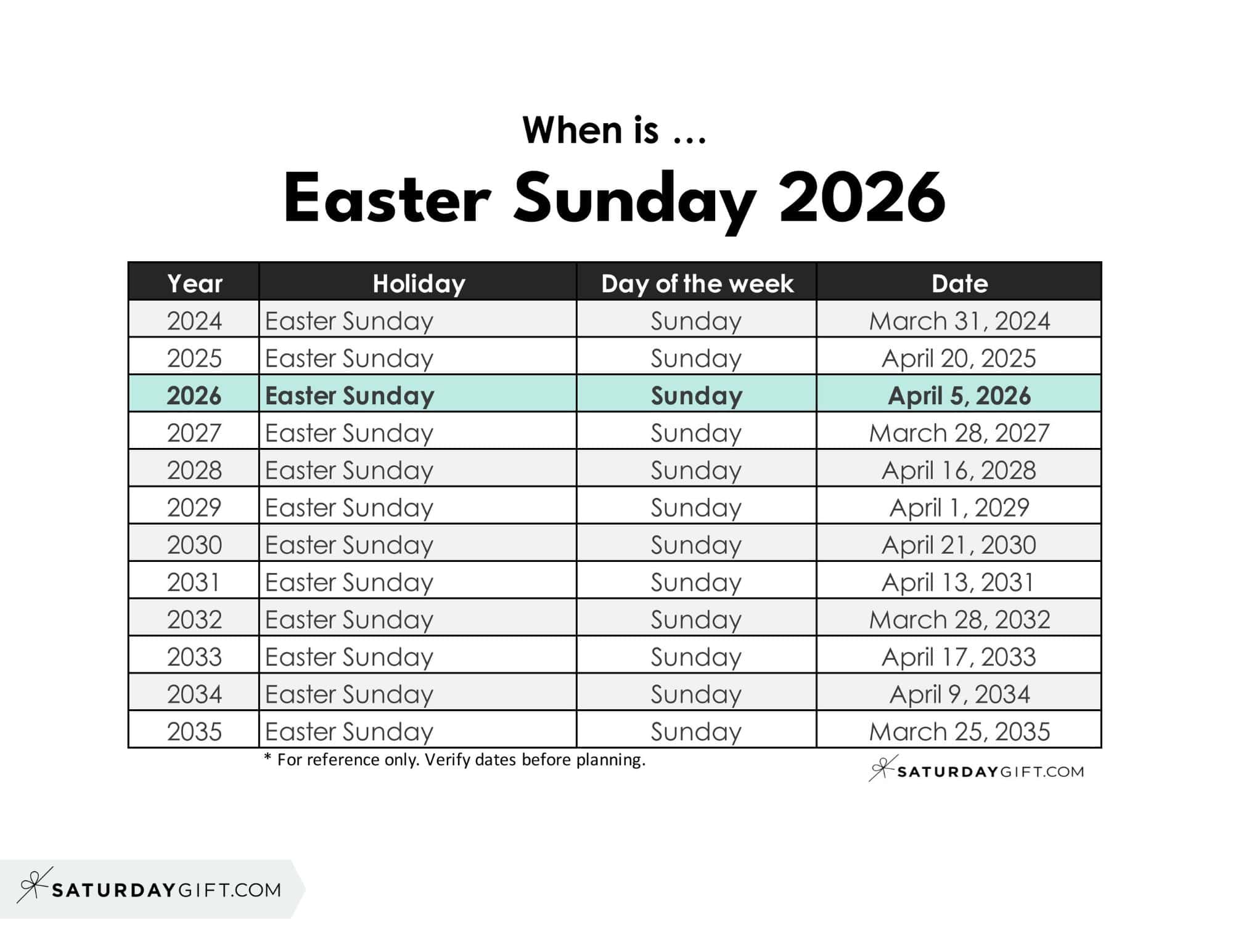
Here’s a quick look at recent and upcoming Western Easter Sunday dates, illustrating its variability:
| Year | Western Easter Sunday Date |
|---|---|
| 2024 | Sunday, March 31 |
| 2025 | Sunday, April 20 |
| 2026 | Sunday, April 5 |
| 2027 | Sunday, March 28 |
| 2028 | Sunday, April 16 |
| 2029 | Sunday, April 1 |
A closer look at the key observances during Holy Week 2026:
| Day | Observance | Significance |
|---|---|---|
| Palm Sunday | Triumphal Entry of Jesus into Jerusalem | Beginning of Holy Week, crowds welcoming Jesus |
| Maundy Thursday | Last Supper, Institution of the Eucharist | Commemorates Jesus’ final meal with disciples |
| Good Friday | Crucifixion and Death of Jesus | Day of solemn reflection and fasting |
| Holy Saturday | Waiting at the Tomb | Period of anticipation before the Resurrection |
| Easter Sunday | Resurrection of Jesus Christ | The central event of Christian faith, joyous celebration |
| Easter Monday | Continuation of Easter celebrations (Public holiday in some countries) | Often a day for family gatherings and relaxation |
Frequently Asked Questions About Easter Dates
Why does Easter move every year?
Easter is a movable feast because its date is tied to a combination of astronomical and ecclesiastical factors, rather than a fixed calendar day. It follows the Paschal Computus rule.
Is Easter a public holiday everywhere?
No, Easter is not a public holiday everywhere. While Good Friday and Easter Monday are widely recognized public holidays in many Western countries, this varies significantly by region and nation. Always check local calendars.
What is the Paschal Full Moon?
The Paschal Full Moon is the first full moon that occurs on or after March 21st, which is the ecclesiastical date for the spring equinox. Easter Sunday is the first Sunday following this full moon.
How is Orthodox Easter different from Western Easter?
Orthodox Easter is often different because it uses the older Julian calendar for its calculations, rather than the Gregorian calendar adopted by Western Christianity. This can result in a difference of one to five weeks.
What are the origins of Easter eggs and bunnies?
Easter eggs symbolize new life and rebirth, adopted by Christians to represent Christ’s resurrection. The Easter bunny originates from German folklore, symbolizing fertility and spring, and was later associated with delivering eggs.
Final Conclusion: Marking the Easter 2026 Calendar Date
The Easter 2026 Calendar Date for Western Christianity, Sunday, April 5, 2026, is now firmly in your sights. Whether you’re planning a quiet day of spiritual reflection, a lively family gathering, or a well-deserved spring break, having this date early allows for thoughtful preparation. This ancient movable feast continues to anchor the spring season for millions, blending deep theological significance with vibrant cultural traditions.
Understanding the intricate calculations, from the Paschal Full Moon to the Council of Nicaea, adds depth to the celebration. It highlights the enduring legacy of this pivotal Christian holiday. Embrace the opportunity to connect with history, nurture generational traditions, and welcome the promise of new beginnings that Easter invariably brings each year. Get ready to enjoy a meaningful and memorable Easter in 2026!