Mastering Your Year: A Millennial’s Guide to the 2026 Calendar
Source: generalblue.com
Planning ahead is key, and understanding the flow of time helps us manage our lives. As we look towards the future, having a clear view of the 2026 calendar is essential for making informed decisions and setting achievable goals. This guide is designed to help you navigate the upcoming year with confidence and purpose.
Why Your 2026 Calendar Matters More Than Ever
In today’s fast-paced world, a well-structured calendar is your secret weapon for productivity and balance. It’s not just about marking dates; it’s about strategic planning for personal growth, career advancement, and meaningful experiences. For millennials, who often juggle multiple responsibilities, from career building and side hustles to social lives and personal development, having a clear roadmap for 2026 is invaluable.
The Power of Planning Ahead
Proactive planning allows you to capitalize on opportunities and mitigate potential challenges. Knowing key dates in advance enables you to book travel, schedule important meetings, and plan personal milestones without last-minute stress. This foresight is crucial for achieving long-term objectives and maintaining a sense of control over your life’s trajectory.
Key Calendar Components for 2026
A standard 2026 calendar will feature a familiar structure, including:
- Days of the Week: Sunday through Saturday, providing a consistent framework.
- Weeks: Divided into manageable seven-day blocks.
- Months: Twelve distinct periods, each with its own number of days.
- Holidays: Major national and international observances that impact work and personal life.
- Special Dates: Birthdays, anniversaries, and personal significant events.
Navigating 2026: Key Dates and Considerations
Understanding the nuances of the 2026 calendar can significantly enhance your planning. This includes recognizing the start and end dates of months, the placement of weekends, and how holidays fall throughout the year.
Understanding Federal Holidays and Observances
Federal holidays often mean a day off work, providing opportunities for rest, travel, or spending time with loved ones. Knowing these dates in advance allows for better planning of vacations and personal activities. For instance, planning a long weekend around a federal holiday can make a short break feel more substantial and restorative.
A Look at 2026 Federal Holidays (Example)
While the exact dates for 2026 will be officially published, typical federal holidays include:
| Holiday Name | Typical Observation | Impact |
|---|---|---|
| New Year’s Day | January 1st | Start of the year, often a day for reflection. |
| Martin Luther King, Jr. Day | Third Monday in January | Commemoration of civil rights leader. |
| Presidents’ Day | Third Monday in February | Honoring past presidents. |
| Memorial Day | Last Monday in May | Honoring fallen soldiers, start of summer. |
| Juneteenth National Independence Day | June 19th | Celebration of emancipation. |
| Independence Day | July 4th | National celebration. |
| Labor Day | First Monday in September | Celebrating workers, end of summer. |
| Columbus Day | Second Monday in October | Observance of Italian-American heritage. |
| Veterans Day | November 11th | Honoring military veterans. |
| Thanksgiving Day | Fourth Thursday in November | Day of gratitude, often with family gatherings. |
| Christmas Day | December 25th | Major religious and cultural holiday. |
Leveraging Your Calendar for Career Growth
In the professional realm, your calendar is a critical tool for career management. This includes scheduling performance reviews, project deadlines, networking events, and professional development opportunities. Effectively managing these dates can lead to improved performance and recognition.
Strategic Scheduling for Millennials
Millennials often seek flexible and growth-oriented careers. Using your calendar to track key professional development milestones, like completing online courses or attending industry conferences, demonstrates your commitment to continuous learning. This proactive approach can be highly attractive to employers and clients alike.
Personal Development and Well-being on Your 2026 Calendar
Beyond work, your calendar should also prioritize personal well-being and development. This means scheduling time for hobbies, exercise, mindfulness, and connecting with loved ones. Integrating these activities ensures a balanced and fulfilling life.
Mindfulness and Self-Care Scheduling
Regularly scheduled self-care is not a luxury; it’s a necessity for sustained well-being. Block out time for activities that recharge you, whether it’s a weekly yoga session, daily meditation, or a weekend hike. Consistent self-care helps prevent burnout and enhances overall life satisfaction.
Financial Planning and Budgeting with Your Calendar

Source: suncatcherstudio.com
Financial health is a significant concern for many millennials. Your calendar can be instrumental in managing budgets, tracking bills, and planning for financial goals like saving for a down payment or investing. Regular financial check-ins are crucial.
Key Financial Dates to Mark
- Bill payment due dates
- Payday
- Investment review dates
- Tax filing deadlines (estimated)
- Savings goal milestones
Choosing the Right Calendar Format for 2026
The best calendar format is the one that works best for your individual needs and preferences. Modern millennials have a variety of options to choose from, catering to different lifestyles and planning styles.
Digital Calendars: The Modern Millennial’s Choice
Digital calendars, like Google Calendar, Outlook Calendar, and Apple Calendar, offer unparalleled convenience and synchronization across devices. They allow for easy sharing, setting reminders, and integrating with other productivity tools.
Benefits of Digital Calendars
- Accessibility: Available on smartphones, tablets, and computers.
- Syncing: Seamlessly updates across all your devices.
- Reminders: Customizable alerts to keep you on track.
- Sharing: Easily share events and availability with others.
- Integration: Connects with email, task managers, and other apps.
Physical Planners: Tangible and Focused
For those who prefer a more tangible approach, physical planners offer a tactile experience that can enhance focus and reduce digital distractions. Many aesthetically pleasing and highly functional planners are available.
Popular Planner Features
- Daily, weekly, and monthly layouts
- Goal-setting pages
- Habit trackers
- Inspirational quotes
- Durable binding and high-quality paper
Hybrid Approaches: Best of Both Worlds
Many individuals find success by combining digital and physical planning methods. Use a digital calendar for appointments and shared events, and a physical planner for daily to-do lists, journaling, and goal setting. This hybrid method can offer the best of both worlds.
Leveraging Calendar Tools and Apps for 2026
The market is flooded with tools designed to enhance calendar management. Understanding these tools can help you optimize your planning process.
Top Calendar Apps and Software
Beyond the standard offerings, specialized apps can provide advanced features:
- Todoist: For task management integration.
- Asana: For project planning and team collaboration.
- Trello: Visual project management.
- Fantastical: A powerful calendar app with natural language input.
Calendar Templates and Printables
If you prefer a DIY approach or need a specific layout, numerous free and paid calendar templates are available online. These can be customized to fit your unique planning needs.
Maximizing Your Year: Tips for Success in 2026
Simply having a calendar isn’t enough; effective utilization is key. Employing smart strategies can ensure you make the most of your time throughout 2026.
Time Blocking and Prioritization
Time blocking involves scheduling specific blocks of time for particular tasks or activities. This method helps ensure that important, yet non-urgent, tasks get the attention they deserve. Prioritizing your tasks based on importance and urgency is a foundational element of effective time management.
Regular Review and Adjustment
Source: saturdaygift.com
Your calendar is a living document. Regularly review your schedule, typically weekly, to assess progress, identify bottlenecks, and make necessary adjustments. Flexibility is crucial for adapting to unforeseen circumstances.
Setting SMART Goals
Ensure your goals are Specific, Measurable, Achievable, Relevant, and Time-bound (SMART). Integrating SMART goals into your calendar planning provides clear objectives and a framework for tracking progress.
SMART Goal Example for 2026
- Specific: Complete an online certification course in digital marketing.
- Measurable: Finish all modules and pass the final exam.
- Achievable: Dedicate 5 hours per week to study and coursework.
- Relevant: Enhance skills for current career or future job prospects.
- Time-bound: Complete the course by June 30, 2026.
FAQ: Your 2026 Calendar Questions Answered
Q1: When does the 2026 calendar officially start?
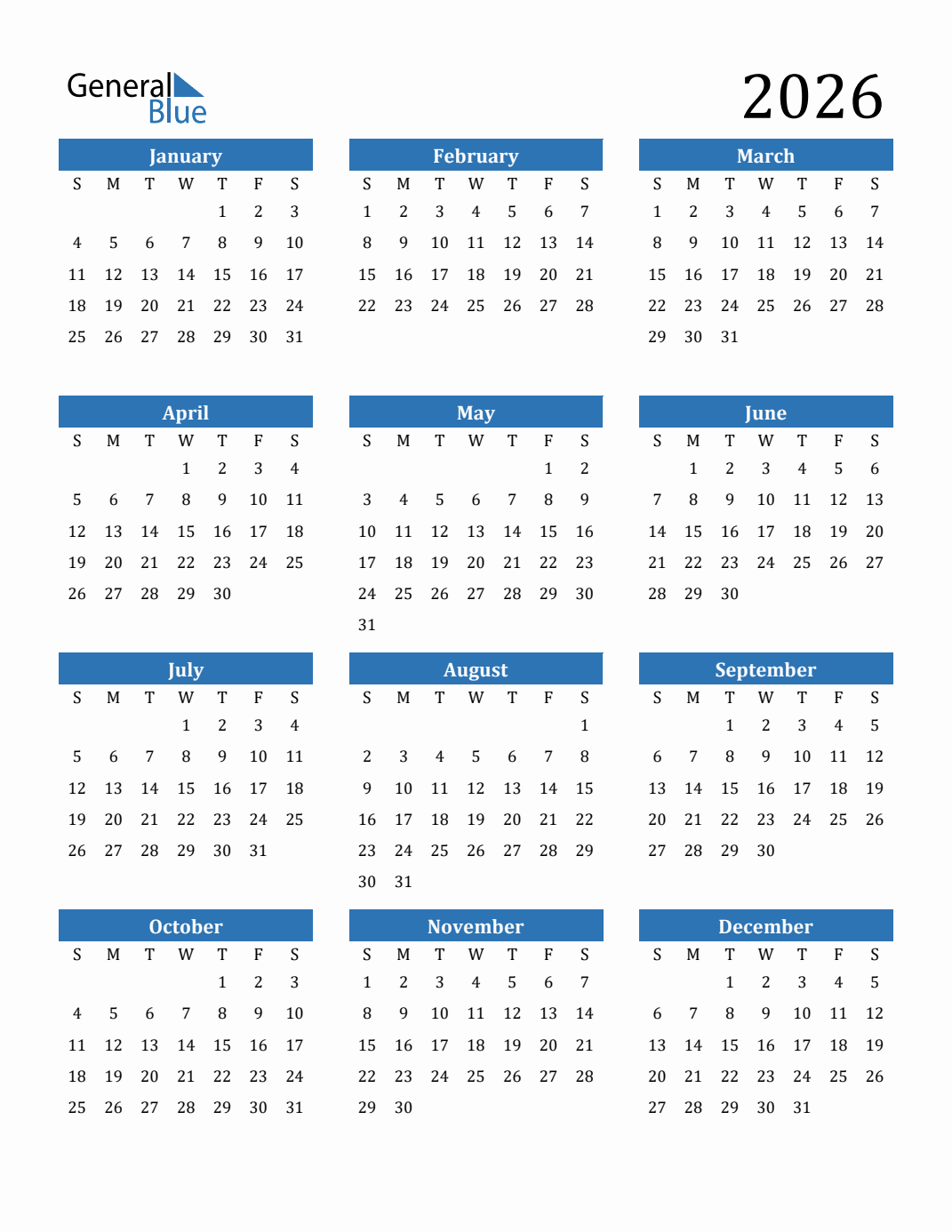
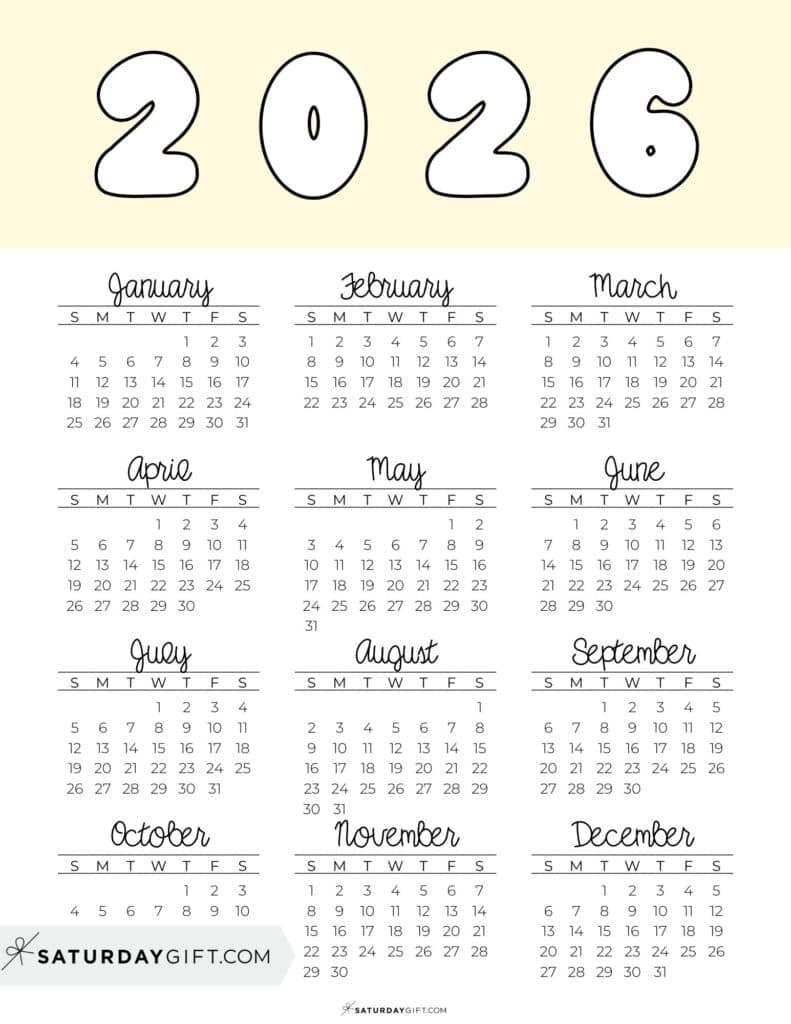
The 2026 calendar officially begins on January 1, 2026, a Wednesday, and concludes on December 31, 2026, a Thursday. This provides a full 365 days for planning and activities.
Q2: How many leap days are in 2026?
There are no leap days in 2026. Leap years occur every four years, with the most recent being 2024 and the next after 2026 being 2028. Therefore, 2026 has a standard 365 days.
Q3: What is the best way to track personal goals using a calendar?
The most effective way to track personal goals is to break them down into actionable steps and schedule dedicated time for them on your calendar. For digital calendars, set recurring reminders. For physical planners, create dedicated goal-tracking pages or habit trackers. Regularly reviewing your progress against your scheduled time is key.
Q4: How can I balance work and personal life using my 2026 calendar?
To balance work and personal life, intentionally schedule time for both. Block out dedicated work hours, but also schedule personal appointments, family time, hobbies, and self-care activities. Treat personal commitments with the same importance as professional ones by putting them directly into your calendar.
Q5: Are there any unique calendar trends for 2026?
While calendar structures remain consistent, trends often emerge in how people use them. Expect continued emphasis on digital integration, personalized planner aesthetics, and a focus on well-being and mindful scheduling as millennials prioritize work-life integration and personal fulfillment.
Conclusion: Embrace 2026 with Strategic Planning
The 2026 calendar offers a fresh slate for achieving your aspirations. By understanding its structure, leveraging the right tools, and implementing effective planning strategies, you can navigate the year with clarity, purpose, and success. Start mapping out your journey today and make 2026 your most productive and fulfilling year yet.