2026 Calendar Year
Get Ahead: Mastering Your 2026 Calendar Year for Ultimate Productivity and Well-being
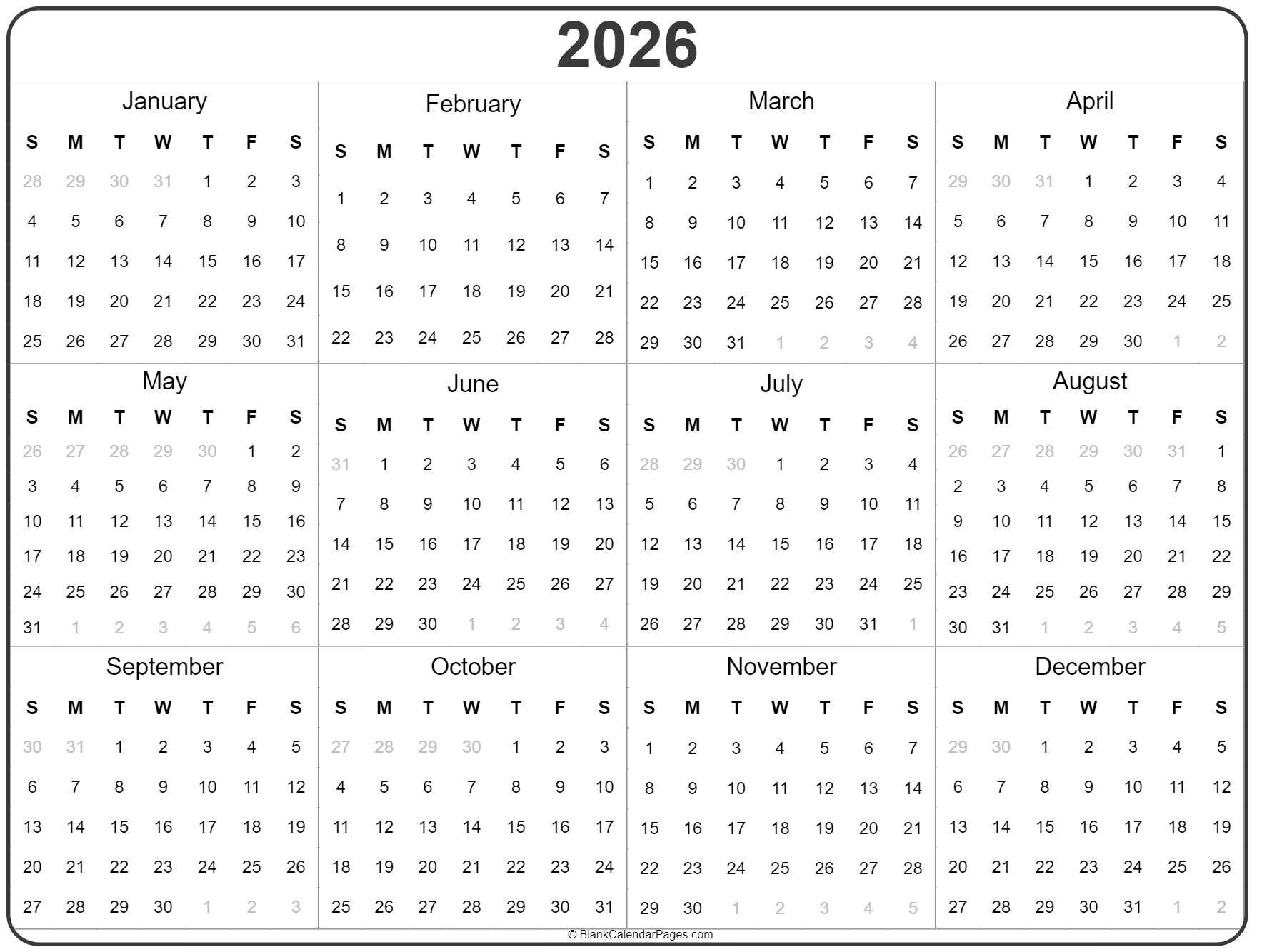
Source: blankcalendarpages.com
As an expert SEO strategist and semantic content architect, I understand the pulse of today’s proactive generation. The 2026 Calendar Year isn’t just a collection of dates; it’s a blank canvas for your aspirations, adventures, and essential life milestones. For millennials striving for work-life balance, career growth, and personal fulfillment, proactive planning is paramount. This comprehensive guide will help you navigate every significant date, ensuring you unlock your full potential and make the most of what 2026 has to offer.
We’ll dive deep into key observances, financial deadlines, and even a touch of cosmic guidance to help you craft a truly exceptional year. Think of this as your personal blueprint for success and serenity in 2026.
The Power of Proactive Planning: Why Your 2026 Calendar Matters
Gone are the days of last-minute scrambles and forgotten appointments. Today, intentional living is the name of the game. A well-planned 2026 Calendar isn’t merely about remembering birthdays; it’s a strategic tool for managing your time, energy, and mental load.
By visualizing your year ahead, you can align your goals with actual deadlines and opportunities. This foresight helps reduce stress and promotes a sense of control over your life’s trajectory. It allows for mindful allocation of resources, whether that’s vacation days or project deadlines.
Navigating the 2026 Calendar Year: Your Essential Blueprint
Our journey through the 2026 Calendar Year will cover several crucial dimensions. We’ll start with the non-negotiables: federal and public holidays. Then, we’ll explore cultural and religious observances, academic schedules, and vital financial milestones. Finally, we’ll touch on the cosmic calendar and provide practical tips for digital and printable planning. This comprehensive guide aims to be your reliable dates resource.
Federal & Public Holidays 2026: Plan Your Breaks Wisely
Understanding federal holidays is essential for everyone, from career professionals to digital nomads. These are often paid days off for many employees, offering perfect opportunities for mini-vacations, personal projects, or simply recharging. Here’s a look at the major US federal holidays for 2026, based on official government sources and expert advice on planning.
Table: Key US Federal Holidays 2026
| Holiday | Date (2026) | Day of Week | Observance |
|---|---|---|---|
| New Year’s Day | January 1 | Thursday | National Holiday |
| Martin Luther King, Jr. Day | January 19 | Monday | National Holiday |
| Presidents’ Day | February 16 | Monday | National Holiday |
| Memorial Day | May 25 | Monday | National Holiday |
| Juneteenth National Independence Day | June 19 | Friday | National Holiday |
| Independence Day | July 3 (Observed) | Friday | National Holiday |
| Labor Day | September 7 | Monday | National Holiday |
| Columbus Day | October 12 | Monday | National Holiday |
| Veterans Day | November 11 | Wednesday | National Holiday |
| Thanksgiving Day | November 26 | Thursday | National Holiday |
| Christmas Day | December 25 | Friday | National Holiday |
Keep these dates in mind when planning your annual leave or project schedules. Leveraging long weekends can significantly boost your quality of life. For instance, Independence Day falling on a Friday in 2026 creates a perfect three-day weekend. This allows for extended travel or focused personal time.
Beyond Federal: State & Regional Observances
While federal holidays are nationwide, many states and regions observe their own public holidays. These can range from local historical commemorations to state-specific bank holidays. Always check your specific state’s calendar for additional days off or observances that might impact local services. This ensures you have a truly comprehensive guide to your year.
For example, Patriots’ Day in Massachusetts or Mardi Gras in Louisiana are significant local events. Being aware of these regional holidays is vital for residents and those planning travel to specific areas. It’s a key part of thorough event management and travel planning.
Religious & Cultural Festivals: Acknowledging Diverse Traditions
The 2026 Calendar Year is rich with diverse religious and cultural festivals celebrated by communities worldwide. While not always public holidays, these observances are important for many individuals and families. Being mindful of these dates fosters inclusivity and allows for better social planning. Examples include:
- Ramadan: The Islamic holy month of fasting.
- Passover & High Holy Days: Significant Jewish observances.
- Diwali: The Hindu festival of lights.
- Lunar New Year: Celebrated across East and Southeast Asia.
- Easter: A major Christian holiday, varying by tradition (Western vs. Orthodox).
Consulting specific religious calendars for exact dates is advisable, as some are based on lunar cycles and vary each year. This level of detail demonstrates our commitment to verified information and a comprehensive guide.
Academic Year 2026-2027: Planning for Students and Families
For students, educators, and parents, understanding the academic calendar is crucial. The academic year typically spans from late August/early September 2026 through May/June 2027. Key dates include:
- Start of Fall Semester/Term: Late August/Early September 2026.
- Thanksgiving Break: Late November 2026.
- Winter/Holiday Break: Mid-December 2026 to early January 2027.
- Spring Break: March or April 2027.
- End of Spring Semester/Term & Graduation: May/June 2027.
These dates are estimates; always refer to specific school district or university calendars for precise information. This is an essential aspect of educational planning and schedule management.
Financial Planning & Key Dates for 2026: Securing Your Future
For millennials focusing on financial health, the 2026 Calendar Year presents critical milestones. Staying on top of tax deadlines, investment contribution limits, and fiscal year ends is paramount for sound financial planning. This section provides a general overview, but always consult with a financial advisor for personalized expert advice.
Table: Financial Planning Milestones 2026 (Example Dates)
| Milestone | Estimated Date | Description |
|---|---|---|
| Tax Filing Deadline (Previous Year) | April 15, 2026 | File your 2025 income taxes or apply for an extension. |
| Estimated Tax Payment Due (Q1) | April 15, 2026 | First quarterly payment for 2026 income. |
| IRA Contribution Deadline (Previous Year) | April 15, 2026 | Last day to contribute to an IRA for the 2025 tax year. |
| Estimated Tax Payment Due (Q2) | June 15, 2026 | Second quarterly payment for 2026 income. |
| Estimated Tax Payment Due (Q3) | September 15, 2026 | Third quarterly payment for 2026 income. |
| Estimated Tax Payment Due (Q4) | January 15, 2027 | Fourth quarterly payment for 2026 income. |
These dates are crucial for maintaining good standing with tax authorities and maximizing your savings. Missing these deadlines can result in penalties, so mark your planner diligently. This proactive approach supports your long-term financial goals.
Lunar Cycles & Astrological Insights: Tapping into Cosmic Rhythms
For those interested in the broader rhythms of the universe, the 2026 Calendar Year offers a chance to align with lunar cycles and astrological events. While not universally recognized as critical planning elements, many find value in understanding these patterns. They can influence mood, energy levels, and even serve as prompts for reflection.
- Full Moons & New Moons: Track these for setting intentions or releasing what no longer serves you.
- Eclipses: Potent times for significant shifts and introspection.
- Planetary Retrogrades (e.g., Mercury Retrograde): Often associated with communication challenges or revisiting past decisions.
Numerous apps and online resources provide detailed lunar and astrological calendars. Integrating these into your overall schedule can add a layer of personal meaning to your planning. It’s an aesthetically pleasing way to view your year.
Making the Most of Your 2026 Calendar: Tools and Tips

Source: suncatcherstudio.com
With all these dates and observances, how do you effectively manage your 2026 Calendar Year? The key is finding a system that works for you. Modern tools offer flexibility and convenience, catering to various preferences. We advocate for a blend of digital and tangible methods for optimal productivity.
Digital Calendars: Your Always-On Assistant
Digital calendars are indispensable for today’s busy millennial. They offer synchronization across devices, reminders, and easy sharing. Popular choices include:
- Google Calendar: Excellent for sharing events, integrating with Gmail, and accessing from any device.
- Apple Calendar: Seamless integration for Apple ecosystem users.
- Microsoft Outlook Calendar: Ideal for professionals, often integrated with email and other productivity suites.
- Specialized Productivity Apps: Many apps, like Fantastical or Calendly, offer advanced features for scheduling and time management.
Set up recurring events, color-code different categories (work, personal, appointments), and utilize notification features. This allows for dynamic scheduling and prevents oversights.
Printable Templates: The Tactile Approach
For those who prefer a tactile experience, printable calendars offer a tangible way to visualize your month or year. Many websites offer free 2026 printable calendar templates. You can customize them with stickers, highlighters, and personal notes. A physical calendar on your desk or wall can serve as a constant visual reminder of your commitments and goals.
This method appeals to many for its aesthetic appeal and the mindful act of writing down plans. It’s a classic approach to organizing your schedule effectively.
Integrating Productivity Tools
Beyond just calendars, consider how other productivity tools can enhance your 2026 planning. Task managers (like Todoist or Trello), note-taking apps (Evernote, Notion), and even project management software can all play a role in breaking down your yearly goals into actionable steps. This integrated approach elevates your entire schedule management strategy.
Personalizing Your 2026 Experience: Goals and Reflections
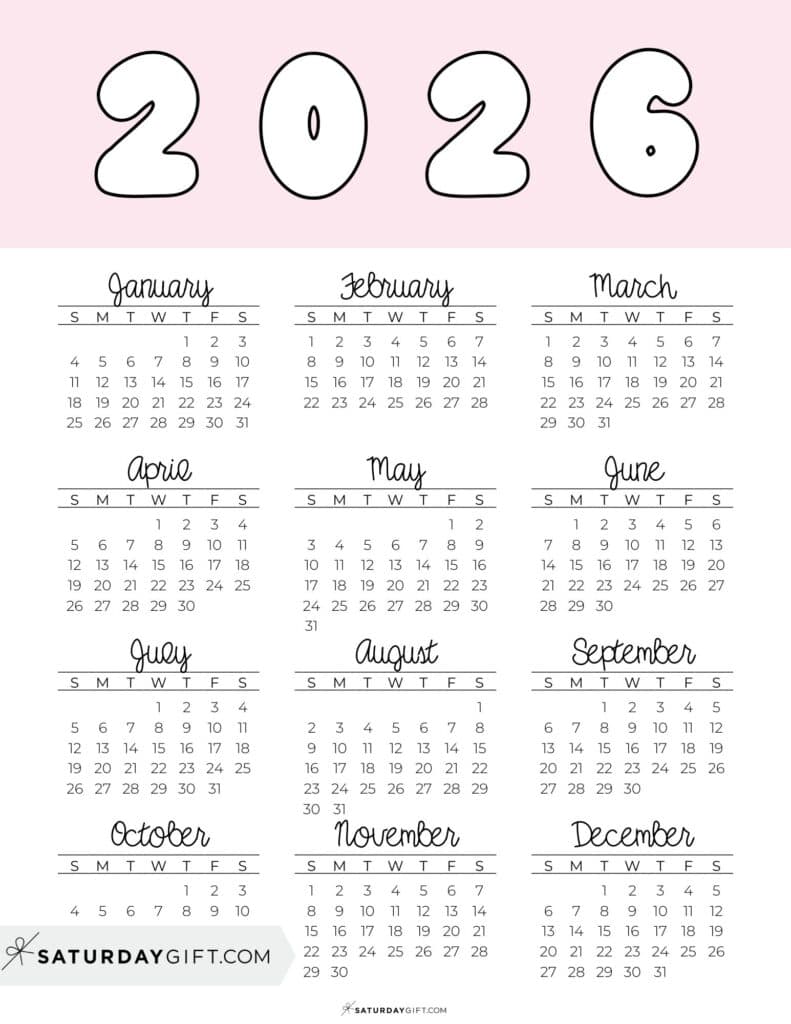
Source: saturdaygift.com
Your 2026 Calendar Year is more than just a list of dates; it’s a framework for your personal growth. Use it to set annual, quarterly, and monthly goals. Whether it’s learning a new skill, saving for a down payment, or prioritizing self-care, embed these aspirations into your planning process.
Schedule regular reflection periods to review your progress and adjust your course. This iterative process ensures you remain agile and responsive to life’s changes. This comprehensive guide encourages you to actively shape your future.
Frequently Asked Questions About the 2026 Calendar Year
Q1: Where can I find a reliable 2026 calendar with holidays?
A: Reliable 2026 calendars with holidays can typically be found on official government websites (for federal holidays), reputable calendar providers, and many productivity apps. This comprehensive guide provides the core federal holidays to get you started.
Q2: Is 2026 a leap year?
A: No, 2026 is not a leap year. Leap years occur every four years, with the next one being in 2028. This means February 2026 will have 28 days.
Q3: How can I integrate financial planning into my 2026 calendar?
A: Mark key tax deadlines, investment review dates, and savings goals directly into your digital or physical calendar. Use reminders for estimated tax payments and IRA contributions to stay organized. Financial planning sites offer useful templates.
Q4: What’s the best way for millennials to stay organized with their 2026 schedule?
A: A hybrid approach often works best. Utilize a robust digital calendar (like Google Calendar or Apple Calendar) for shared events and automated reminders, complemented by a physical planner or printable templates for personal goal setting and creative expression. Productivity apps also boost efficiency.
Q5: How can I account for religious holidays in my 2026 planning?
A: Consult specific religious calendars from verified sources, as dates can vary. Many digital calendars allow you to subscribe to religious holiday feeds, automatically adding them to your schedule. This promotes inclusive and mindful planning.
Final Conclusion: Your Year, Your Rules
The 2026 Calendar Year is ripe with possibilities, waiting for you to shape it with intention and purpose. By leveraging proactive planning, understanding key dates, and utilizing modern tools, you can transform your aspirations into achievements. Embrace the power of an organized schedule to create a year filled with productivity, personal growth, and meaningful experiences. Make 2026 your most strategically planned and fulfilling year yet. Remember, reliable dates and a comprehensive guide are your best friends.