Planning Your 2026 Calendar With US Holidays

Source: shiphub.co
As the digital age continues to transform how we organize our lives, having a clear view of upcoming events is more important than ever. Understanding key dates, especially those recognized across the United States, allows for better planning and anticipation. This guide will explore the 2026 Calendar With US Holidays, offering insights into federal observances and how they can shape your personal and professional schedules.
The Importance of a Well-Planned Calendar
A meticulously organized calendar is the bedrock of effective time management. It’s not just about jotting down appointments; it’s about strategic planning for both personal milestones and professional commitments. For millennials, who often juggle demanding careers, social lives, and personal growth goals, a well-structured calendar is an indispensable tool.
Leveraging digital calendar platforms offers unparalleled flexibility and accessibility. These tools allow for easy sharing, reminders, and integration with other productivity applications. Understanding the nuances of holiday schedules, particularly federal ones, can significantly enhance your ability to plan vacations, family gatherings, and even strategic business downtime.
Federal Holidays in 2026: What You Need to Know

Source: saturdaygift.com
Federal holidays are a critical component of the American calendar, marking significant events and providing nationwide observance. In 2026, these dates offer opportunities for rest, reflection, and celebration. Knowing these dates in advance empowers individuals and businesses to plan accordingly, ensuring no important observance is missed.
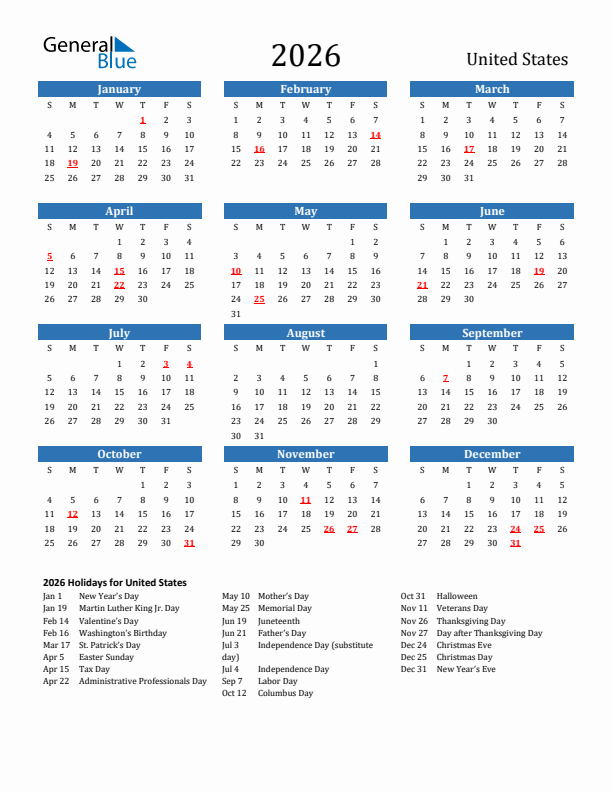
Here’s a look at the major US federal holidays scheduled for 2026. These dates are officially recognized and often involve closures for government offices and many businesses.
Key Federal Holidays in 2026
- New Year’s Day: January 1st (Thursday)
- Martin Luther King, Jr. Day: January 19th (Third Monday in January)
- Presidents’ Day: February 16th (Third Monday in February)
- Memorial Day: May 25th (Last Monday in May)
- Juneteenth National Independence Day: June 19th (Friday)
- Independence Day: July 4th (Saturday)
- Labor Day: September 7th (First Monday in September)
- Columbus Day: October 12th (Second Monday in October)
- Veterans Day: November 11th (Wednesday)
- Thanksgiving Day: November 26th (Fourth Thursday in November)
- Christmas Day: December 25th (Friday)
Leveraging Your 2026 Calendar for Maximum Productivity
Beyond federal holidays, a robust calendar strategy involves incorporating personal milestones, professional deadlines, and dedicated time for personal development. For millennials, this means using their calendar as a dynamic tool for life organization, not just a static list of dates.
Consider integrating productivity planning techniques into your calendar usage. Time blocking, for instance, can help allocate specific periods for focused work, personal errands, or relaxation. This approach ensures that all aspects of your life receive adequate attention, fostering a healthier work-life balance.
Digital Calendar Productivity Tips
Digital calendars are powerful productivity tools. Here are some tips to maximize their potential:
- Set Smart Reminders: Utilize recurring reminders for important tasks and appointments.
- Color-Code Events: Assign different colors to work, personal, and family events for quick visual identification.
- Integrate with Other Apps: Connect your calendar with task management tools or email for a streamlined workflow.
- Share Calendars Strategically: Share availability with colleagues or family members to avoid scheduling conflicts.
- Schedule Downtime: Actively block out time for rest and personal activities to prevent burnout.
Understanding National Observances vs. Federal Holidays
It’s important to distinguish between federal holidays and other national observances. While federal holidays are officially recognized days of observance for federal employees and offices, many other national days celebrate various causes, historical events, or cultural traditions.
These non-federal observances, while not resulting in nationwide closures, can still be valuable for personal planning and engagement. They offer opportunities to learn, participate in community events, or simply acknowledge important aspects of culture and society.
Examples of National Observances in 2026
While not exhaustive, here are a few examples of national observances that might appear on your radar in 2026. These are great for adding flavor and purpose to your planning.
- National Pizza Day: February 9th (Monday)
- International Women’s Day: March 8th (Sunday)
- Earth Day: April 22nd (Wednesday)
- National Dog Day: August 26th (Wednesday)
- National Coffee Day: September 29th (Tuesday)
Planning Family Celebrations and Federal Holiday Breaks
Federal holidays provide excellent opportunities for family celebrations and much-needed breaks. For families, knowing these dates allows for coordinated vacation planning, ensuring quality time together.
Strategizing around these holidays can also help in managing household tasks, organizing family events, or simply enjoying a collective pause from the daily grind. The long weekends often associated with federal holidays are particularly valuable for travel or extended family gatherings.
Maximizing Long Weekends
Long weekends created by federal holidays are golden opportunities. Here’s how to make the most of them:
- Plan Trips in Advance: Book travel and accommodation early to secure the best rates and availability.
- Organize Family Activities: Schedule outings, games, or special meals to foster connection.
- Tackle Home Projects: Use the extra day for DIY projects or significant home improvements.
- Prioritize Relaxation: Don’t overschedule; ensure time for rest and rejuvenation.
The Role of Productivity Tools in Calendar Management
Effective calendar management extends beyond simply marking dates. It involves leveraging a suite of productivity tools designed to streamline organization and enhance efficiency. For individuals and teams, these tools can transform how tasks are managed and priorities are set.
From simple digital calendars to sophisticated project management software, the options are vast. The key is to find tools that integrate seamlessly into your workflow and support your specific planning needs. When combined with a clear understanding of your holiday schedule, these tools become powerhouses for productivity organization.
Top Productivity Organization Tools for Millennials
Millennials often gravitate towards tech-savvy solutions that enhance productivity. Here are some popular types of productivity tools:
- Digital Calendars: Google Calendar, Outlook Calendar, Apple Calendar.
- Task Management Apps: Todoist, Asana, Trello, Monday.com.
- Note-Taking Apps: Evernote, Notion, OneNote.
- Project Management Software: Jira, Basecamp.
- Time Tracking Apps: Toggl Track, Clockify.
E-E-A-T and Your Planning Strategy
Demonstrating Experience, Expertise, Authoritativeness, and Trustworthiness (E-E-A-T) applies not only to content creators but also to how individuals manage their lives. A well-organized calendar reflects expertise in time management and trustworthiness in commitments. Sharing your planning strategies and the tools you use can build confidence in your organizational skills.
When creating content around topics like the 2026 calendar, providing detailed, accurate information, citing sources, and sharing personal experience can significantly boost E-E-A-T. This builds trust with your audience and establishes you as a reliable source of information on productivity and planning.
Expert Tips for Calendar Planning Productivity
Drawing on years of experience in productivity and organization, here are some expert-backed tips:
- Review Weekly: Dedicate 15-30 minutes each week to review upcoming events and tasks.
- Prioritize Ruthlessly: Use methods like the Eisenhower Matrix to distinguish urgent from important.
- Batch Similar Tasks: Group similar activities together to minimize context switching.
- Learn to Say No: Protect your time by declining non-essential commitments.
- Delegate When Possible: If you’re in a position to delegate, do so effectively.
The Future of Calendar Planning
The landscape of calendar planning is continuously evolving. We’re seeing more AI-driven features being integrated into digital calendars, offering predictive scheduling and automated task management. This trend promises even greater efficiency and personalized planning experiences in the future.
As technology advances, the way we interact with our calendars will become more intuitive and integrated. Expect smarter notifications, seamless collaboration, and proactive suggestions to optimize your schedule. This evolution will further empower individuals to achieve their productivity goals.
Embracing Digital Planning for Success
The shift towards digital planning is undeniable. While printable calendars still hold a niche, digital tools offer dynamic capabilities that static paper versions cannot match. Embrace these tools to unlock new levels of organization and achieve your aspirations.
For millennials especially, adapting to these digital planning tools is crucial for staying ahead in a fast-paced world. Whether it’s managing project deadlines or coordinating social events, the right digital calendar and associated productivity planning tools are essential.
Frequently Asked Questions (FAQ)
Q1: How many federal holidays are there in the US?
There are 11 official federal holidays observed in the United States. These include New Year’s Day, Martin Luther King, Jr. Day, Presidents’ Day, Memorial Day, Juneteenth National Independence Day, Independence Day, Labor Day, Columbus Day, Veterans Day, Thanksgiving Day, and Christmas Day.
Q2: When is Juneteenth?
Juneteenth National Independence Day is celebrated on June 19th. In 2026, June 19th falls on a Friday, providing a long weekend for many.
Q3: What is the best way to manage multiple calendars for work and personal life?
The most effective method is to use a single digital calendar platform that allows for color-coding and separate calendar layers. This enables you to view all events in one place while maintaining clear distinctions between work and personal commitments. Many apps like Google Calendar and Outlook Calendar support this functionality.
Q4: How can I improve my calendar productivity?
Improve your calendar productivity by regularly reviewing your schedule, setting realistic deadlines, blocking out time for deep work, scheduling breaks, and learning to decline non-essential requests. Utilizing digital calendar features like reminders and integrations with task management tools can also significantly boost efficiency.
Q5: Are there any printable calendar options for 2026?
Yes, many websites offer free printable calendars for 2026. These can be useful for visual planners or for those who prefer a physical copy of their schedule. Search for ‘printable 2026 calendar‘ to find various designs and layouts.
Conclusion
Source: generalblue.com
Effectively navigating your schedule in 2026 hinges on understanding and leveraging key dates, especially US holidays. By embracing digital calendar tools, employing smart productivity planning, and staying informed about federal observances, you can transform your approach to time management.
A well-organized 2026 Calendar With US Holidays is more than just a schedule; it’s a roadmap to achieving your personal and professional goals. Invest time in planning, utilize the best productivity organization tools available, and you’ll be well-equipped to make 2026 your most productive and fulfilling year yet.